
Outdoor Roaches in Las Vegas: Turkestan, American and Oriental, and What Works
Big roaches in the yard or the drain? A local technician explains the three outdoor roaches of Las Vegas, which ones fly, and why sprays alone fail.
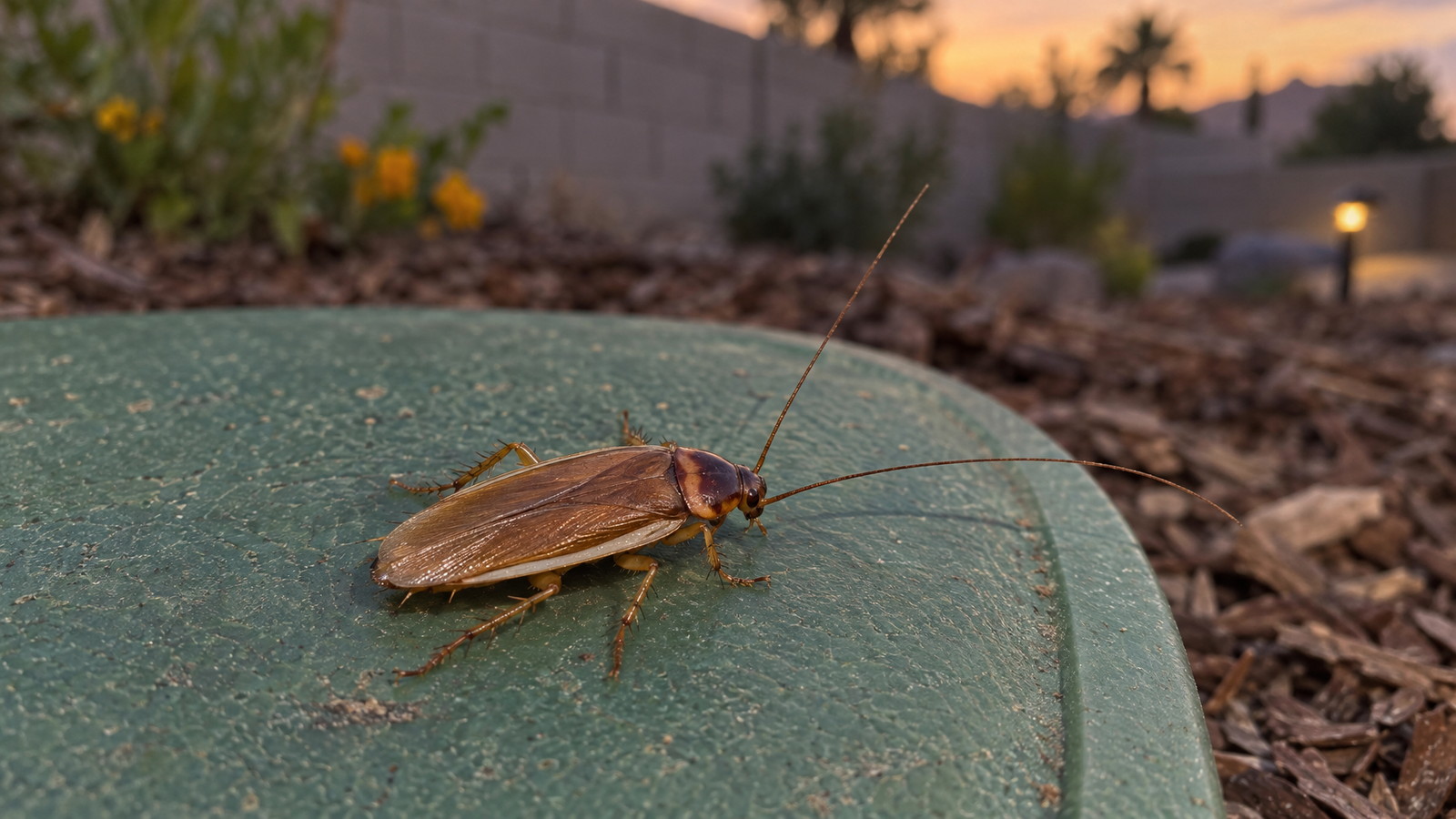
The roach on the patio at night, the one in the garage corner, and the one that came out of the shower drain are usually not the same species, and none of them is the small striped roach that lives in kitchens. Here is how to tell the three outdoor roaches of the Las Vegas Valley apart, where they live, and what actually keeps them out.
What kind of roach is in my Las Vegas yard?
One of three outdoor species. The Turkestan cockroach is the most common now: the male is about an inch long and tan with cream-edged wings, the female is dark with cream markings and short wings. The American cockroach is larger, about two inches and reddish brown. The Oriental cockroach is a uniform dark brown to black.
The University of California's pest management program describes the Turkestan cockroach as a newer invasive species that is now very common in outdoor residential areas and is displacing the Oriental cockroach in warm, dry regions, which describes the Las Vegas Valley exactly. Females mature faster and lay more eggs than Oriental females, which is how they took over. If you have seen the dark roach your parents called a water bug replaced by tan ones that fly, that is why.
Which roaches in Las Vegas can fly?
Male Turkestan cockroaches have full wings and fly, and on warm summer nights they are drawn to porch lights, pool lights and lit windows. The dark females cannot fly. American cockroaches have full wings and can fly or glide short distances in hot weather. Oriental cockroaches do not fly and cannot climb smooth surfaces.
We have had one fly straight at us on a night service, and that is almost always a male Turkestan heading for a light. It is startling, not dangerous. The practical point is that a roach at the porch light did not walk up from the drain. It flew in from the yard, the neighbor's beds, or the block wall, and treating the lit side of the house without the beds misses where it came from.
Where do outdoor roaches hide around Las Vegas homes?
Gardens, flower and soil beds, and around drains. They live in the damp cracks between concrete, in irrigation and water meter boxes, under mulch and leaf litter, in compost and potted plants, and in block wall voids. Inside, we sometimes find them under the kitchen sink or around the pantry, usually after they walked in looking for water.
Each species has a preference. Turkestan and Oriental cockroaches love masonry enclosures, which is why a water meter box in this valley can hold dozens. American cockroaches favor sewers and storm drains and forage into the ground floor of a house when a drain trap has dried out or a pipe is damaged, so a roach out of the shower drain is usually an American. All three come out at night, so a flashlight walk of the beds and boxes after dark tells you more than a daytime look.
Which homes get the most outdoor roaches?
Homes with gardens, food sources, or lots of moisture. A vegetable bed with drip lines, fruit on the ground, pet food on the patio, and a yard that stays damp give the roaches water, food and cover in the same ten feet. Dry rock yards in the middle of the valley have far fewer.
That shows up everywhere in the valley, from the established, heavily planted lots in Summerlin and Henderson to the lush, watered landscaping around Lake Las Vegas. Monsoon season makes it worse. Late summer humidity and rain push the beds and boxes past saturated, and the roaches relocate toward the house, which is when the garage and the back door see the most traffic.
Why doesn't spraying get rid of outdoor roaches?
Because contact sprays alone do not work. A spray kills the roach it lands on and then dries out in a day of desert heat, while the population in the beds and boxes never saw it. Outdoor roaches need a longer-lasting residual treatment in the places they live and travel, not a spray on the ones that reached the patio.
Foggers and aerosol bombs are worse than useless here. They can scatter roaches into new areas without killing them, which is why a fogged garage often produces roaches in the laundry room a week later. The ones you see are the edge of the population; the treatment has to reach the middle.
How do you get rid of Turkestan, American and Oriental roaches?
With three pieces. A granular treatment in the flower and soil beds where they breed. A residual perimeter treatment around the home, where bifenthrin is the active ingredient we commonly use because it lasts much longer than a contact spray. And contact treatment for the roaches we find in boxes, walls and the garage.
The granules go where the moisture is: drip lines, mulch, the base of shrubs and the beds against the house. The perimeter residual covers the slab edge, doorways, weep holes and the block wall base so roaches crossing from the beds are exposed on the way. Water meter and irrigation boxes get opened and treated, because that is where the numbers hide. Outdoor roach work is part of our cockroach control service, and we treat the inside of the garage and the kitchen only where roaches actually turned up.
What can you do yourself that actually helps?
Keep things clean, remove food sources, and fix moisture problems. Pick up fallen fruit, bring pet food in at night, and keep trash lids closed. Then look for water: a leaking valve, a drip line that puddles, a hose bib that drips onto the slab, and a planter that never dries out are each a roach nursery.
A few more habits that help:
- Pull mulch and leaf litter back from the foundation and thin dense ground cover against the house.
- Run water in unused drains every couple of weeks so the trap stays full and blocks the sewer.
- Switch porch lights to warm bulbs and keep them off when you do not need them, since flying males follow the light.
- Fit sweeps on exterior doors and a fresh bottom seal on the garage door.
When should you call a professional?
If you are seeing roaches come out of drains, call. That points to the plumbing or sewer side of the problem, where American cockroaches live, and it needs an inspection rather than a spray. The same goes for roaches turning up inside the house during summer, which means the population outside has grown past what the perimeter can hold.
When you call or text us, we walk the beds, boxes and block walls after dark if needed, tell you which species you have and where they are living, and treat the beds, perimeter and harborage the same visit. We serve the entire Las Vegas Valley, including Henderson, Summerlin, Lake Las Vegas, Anthem and Boulder City, seven days a week. Call or text for a free inspection.
Related
More guides
German Cockroaches in Your Las Vegas Kitchen: Why One Is an Emergency
Small striped roach under the sink? A local technician explains why one German cockroach in a Las Vegas kitchen is urgent and what treatment involves.
Mice in Your Las Vegas House: How to Tell Mice From Rats and What to Do
Droppings in the garage or a mouse in the pantry? A local technician explains how to tell mice from roof rats, how they get in, and what gets rid of them.
Black Widows in Your Las Vegas House: Why There Is Never Just One
Found a black widow in your Las Vegas garage? A local technician explains where they hide, why killing the one you see fails, and how treatment works.